The Evolution of React: From create-react-app to Modern Frameworks
Remember when npx create-react-app was the go-to? Explore how React development has evolved and why we now reach for frameworks like Next.js and Vite.
January 15, 2024
The Good Old Days of Create React App
If you started learning React a few years ago, you probably remember typing this magical command:
npx create - react - app my - app
It was simple.It was straightforward.You'd run the command, wait a few minutes, and boom - you had a React application ready to go. No configuration needed. It just worked.
Create React App(CRA) was released in 2016 and quickly became the official way to start a React project.The React team recommended it, tutorials used it, and developers loved it.It abstracted away all the complex webpack configurations and gave us a zero - config setup.
Why Things Changed
But the web ecosystem doesn't stand still. As React applications grew more complex and user expectations increased, we started noticing some pain points:
- Performance: Client-side rendering meant users saw a blank screen while JavaScript loaded and executed
- SEO: Search engines struggled to crawl JavaScript-heavy applications
- Build Times: As projects grew, CRA's webpack-based builds became slower
- Limited Features: No built-in routing, server-side rendering, or API routes
The Rise of Modern Frameworks
Enter the new generation of React frameworks.In 2022, the React team made a significant announcement - they updated their documentation to recommend starting new React projects with a framework instead of CRA.
Next.js: The Full - Stack React Framework
Next.js emerged as the popular choice, offering:
- Server - Side Rendering(SSR) and Static Site Generation(SSG) out of the box
- File - based routing - just create a file, get a route
- API routes to build full - stack applications
- Automatic code splitting and optimization
- Built -in Image and Font optimization
The App Router in Next.js 13 + took it even further with React Server Components, streaming, and improved layouts.
Vite: Lightning Fast Development
Vite revolutionized the development experience with:
- Instant server start using native ES modules
- Lightning - fast Hot Module Replacement(HMR)
- Optimized production builds using Rollup
- Framework - agnostic design(works with React, Vue, Svelte, etc.)
Starting a Vite project is as simple as: npm create vite @latest
What This Means for You
If you're starting a new React project today, consider:
- Next.js if you need SEO, server rendering, or want a full-stack solution
- Vite if you want a fast, simple setup for a client-side app
- Remix for a web fundamentals-focused approach
The era of create - react - app was important - it made React accessible to everyone. But technology evolves, and so must our tools. These modern frameworks aren't just adding complexity; they're solving real problems that we face in production applications today.
The Journey Continues
What's beautiful about this evolution is that React itself hasn't changed dramatically.The components you write, the hooks you use - they're still React. What's changed is the ecosystem around it, making it easier to build faster, more user - friendly applications.
So next time you start a project, instead of reaching for that old npx create - react - app , explore what these modern frameworks offer. Your users (and your future self) will thank you.
Here are some other articles you might find interesting.
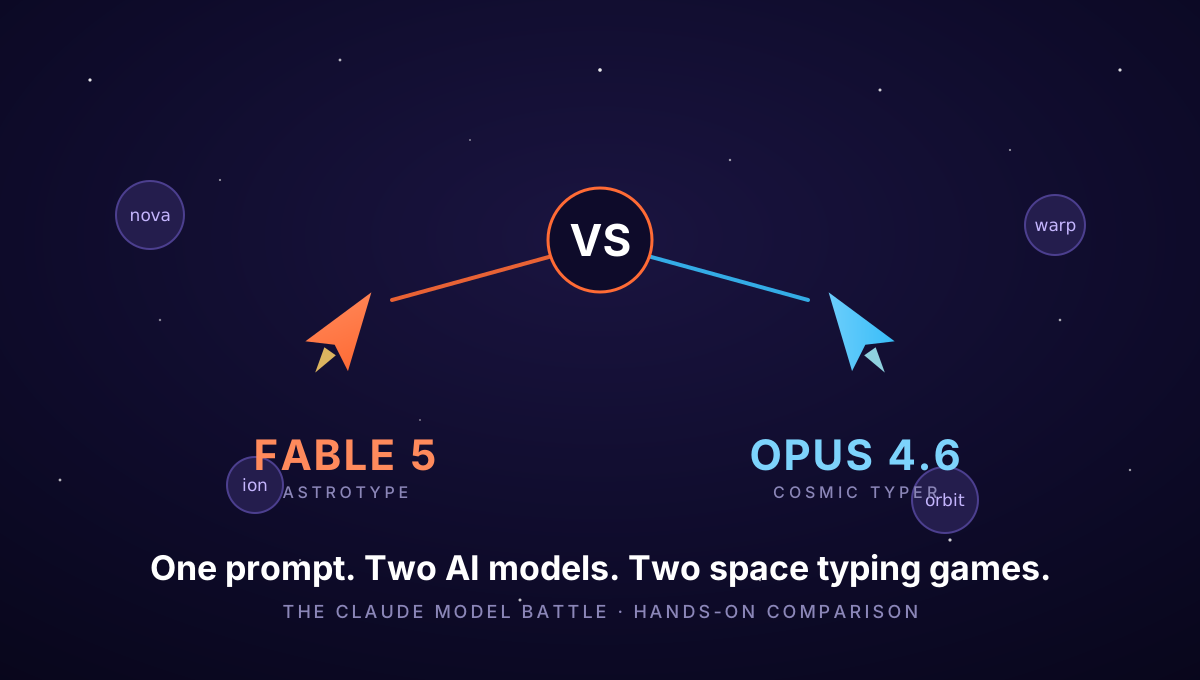
Fable 5 vs Opus 4.6: I Gave Two Claude Models the Same Prompt - Both Built Me a Space Shooter
One prompt - my 'astro type typing lab' idea - sent to Claude Fable 5 and Claude Opus 4.6, no follow-ups allowed. Both independently invented a space typing-defense game. Here's the full teardown: architecture, features, SEO, design - and both games are playable inside this post.
How My Internship at Coding Jr Kickstarted My Career - From Newbie Errors to Production Code
My complete internship journey at Coding Jr EdTech - working under visionary IIT BHU founders Sumit Bhat & Vikas Shukla, learning production-level coding from incredible mentors, and growing from a nervous intern to a confident developer.