Code Apex: How a Casual Call Led to a District-Level Coding Victory
From a spontaneous registration to competing against 240 teams at CODEATHON 2024. Here's how Atharva and I secured 2nd Runner-Up at MGM University's district-level competition.
April 2, 2024
The Call That Started It All
I saw the CODEATHON 2024 registration floating around and just went for it. Filled the form, no second thoughts. Then I called Atharva.
"Bhai, form bharla. CODEATHON 2024. MGM University la ye." (Translation: Bro, I filled the form. CODEATHON 2024. Come to MGM University.)
Atharva didn't ask questions. No "what's the syllabus?" No "let me think about it." Just - "Bhai, burrr yeto." (Translation: Alright bro, coming.)
That's how it works with Atharva. No overthinking. No "let me check my schedule." Just trust and go.
Aakash, Sourabh, and Swapnil also registered - everyone was hyped. A whole squad heading to MGM University for a district-level competition. Little did I know that casual call would lead to one of the most intense days of my college life.
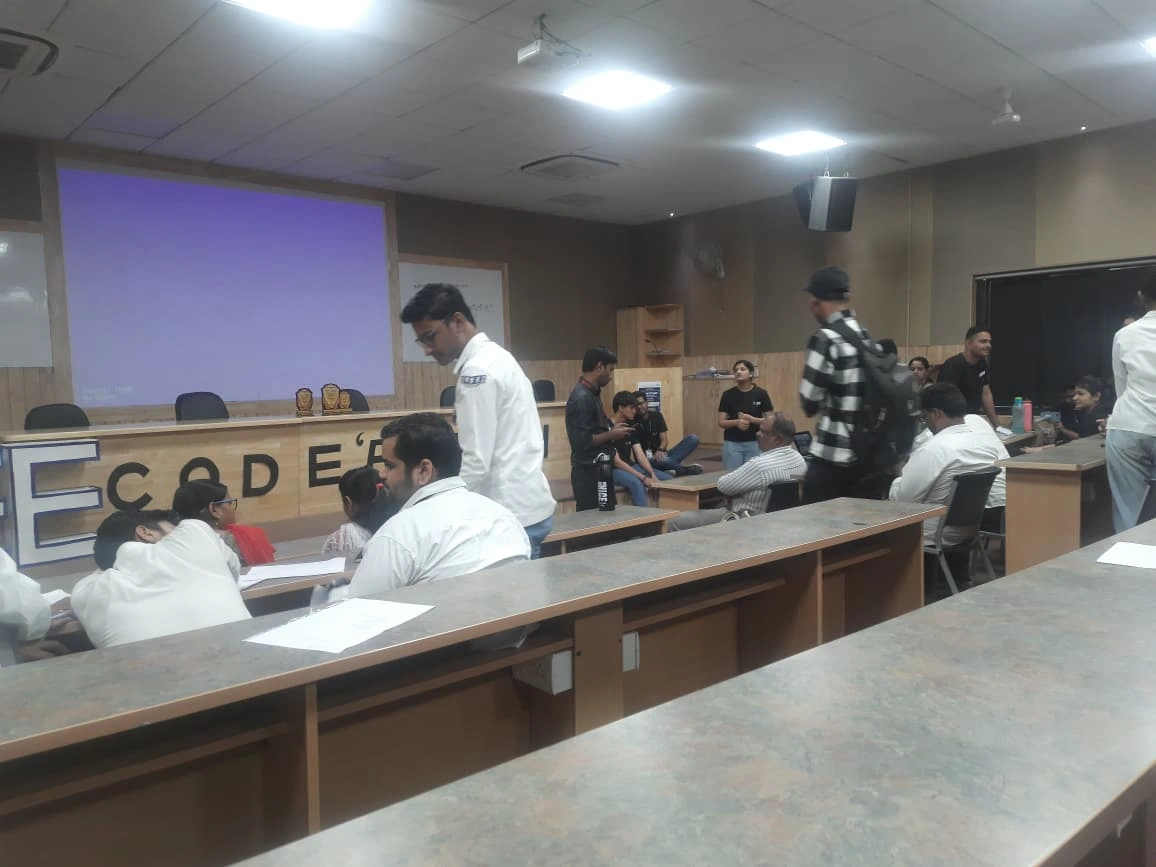
The CODEATHON 2024 venue at MGM University - the energy in that hall was unreal.
Welcome to CODEATHON 2024
March 30, 2024. MGM University, Chhatrapati Sambhajinagar. District-level programming competition organized by UDICT-IEEE Student Branch.
The numbers hit different when you see them in person:
- 240 duo teams - that's 480 coders in one venue
- 3 elimination rounds - MCQ, Competitive Coding, and Final Problem Solving
- One day - no overnight grind, just pure back-to-back intensity
We registered as Code Apex. At the time, it was just a cool name. By the end of the day, it would mean something.
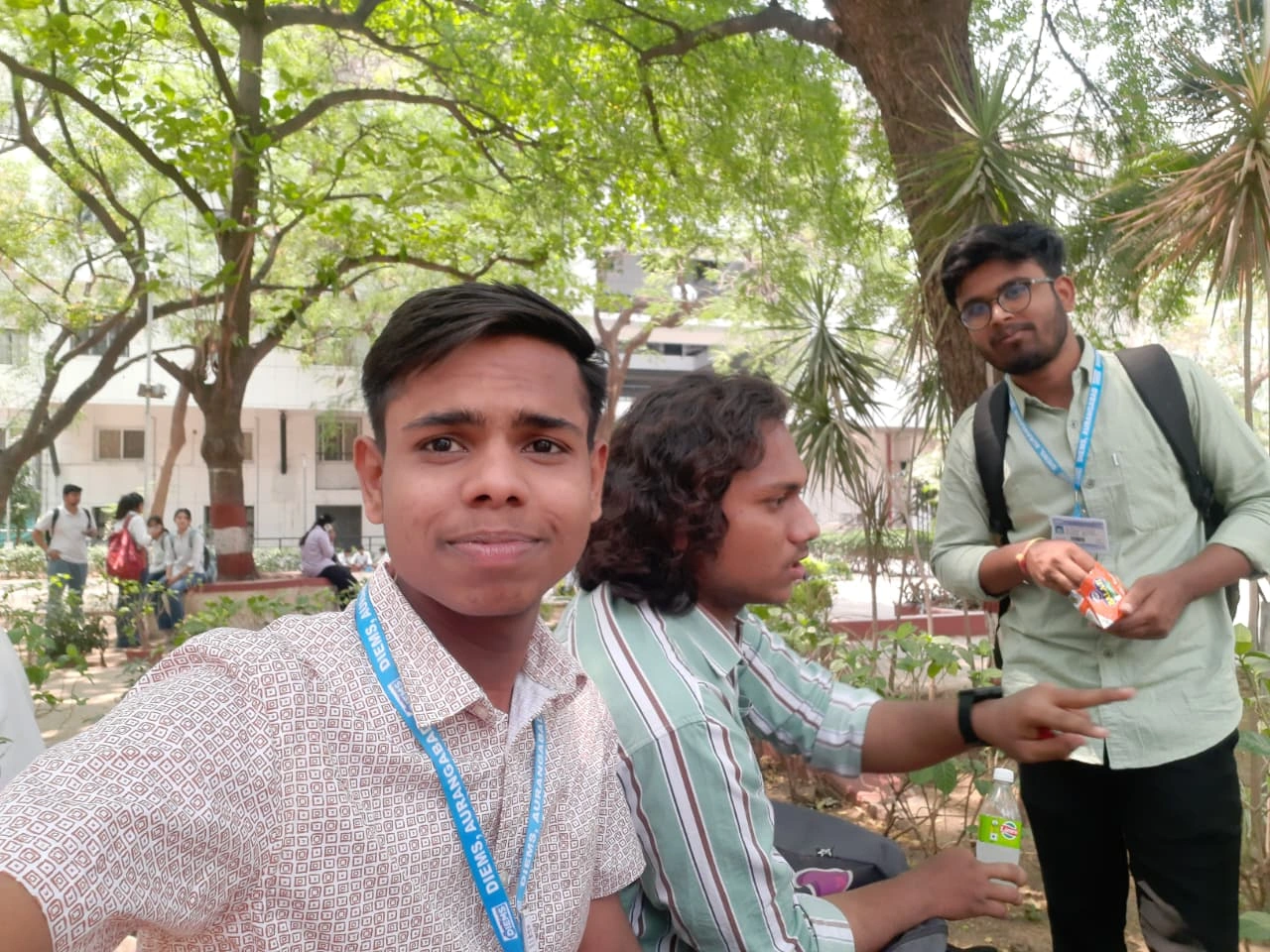
The squad at MGM University - ready to compete. One day. Three rounds. Let's go.
Round 1: The MCQ Massacre
First round is always the bloodbath. Around 50 MCQ questions designed to filter out teams fast. And these weren't your typical textbook questions - they covered everything:
- DSA - sorting complexities, tree traversals, graph algorithms
- Web Development - HTTP methods, CSS specificity, JavaScript quirks
- Cyber Security - encryption types, network protocols, common vulnerabilities
- General CS - OS concepts, DBMS queries, OOP fundamentals
The breadth was brutal. You couldn't just be good at one thing - you had to know a bit of everything.
Atharva and I split the paper. He hammered through the DSA and algorithm questions. I tackled the web, cyber, and system-level ones. No ego. Just efficiency.
There was a cutoff criteria to advance to Round 2. Not everyone made it.
The Hard Part
Aakash, Sourabh, and Swapnil - our boys who came with us, hyped and ready - couldn't clear the cutoff. It's not that they didn't try. They absolutely did. Aakash was grinding through tricky DSA questions. Sourabh was battling the web and cyber section. Swapnil gave the logical reasoning his best shot.
But 50 questions across every domain in a tight time limit? That's merciless. The cutoff was harsh, and sometimes the margin between clearing and not clearing is just one or two questions.
Watching your friends not make it while you move forward - that's a feeling no competition prepares you for. We wanted the whole squad in Round 2. That didn't happen.
But here's what matters: they showed up. They registered. They competed. They sat in that hall and gave it everything. That takes guts. Not everyone even has the courage to enter a district-level competition.
Results come out. Code Apex - Qualified.
Half the teams are gone. We're still in. But the victory feels incomplete without the full squad.
Round 2: Where Code Apex Took Over
Second round is where casual participants get exposed. This is real competitive coding - timed problems, algorithmic thinking, clean submissions.
The pressure ramps up immediately. Problems covering data structures, algorithms, optimization - the kind that separate coders who practice daily from those who cram before competitions.
This is where Atharva and I found our rhythm. We weren't just solving problems - we were demolishing them.
- Atharva: Lightning fast on DSA - his implementations were clean and he rarely needed a second attempt
- Me: I handled the edge cases, tested inputs, and optimized where needed
We didn't just answer - we discussed. Quick, whispered strategy: "Try greedy here." "Nah, DP. Trust me." "Okay, going with it."
Problem after problem. Submit. Accepted. Submit. Accepted. The leaderboard was updating in real-time.
And then we looked up at the screen.
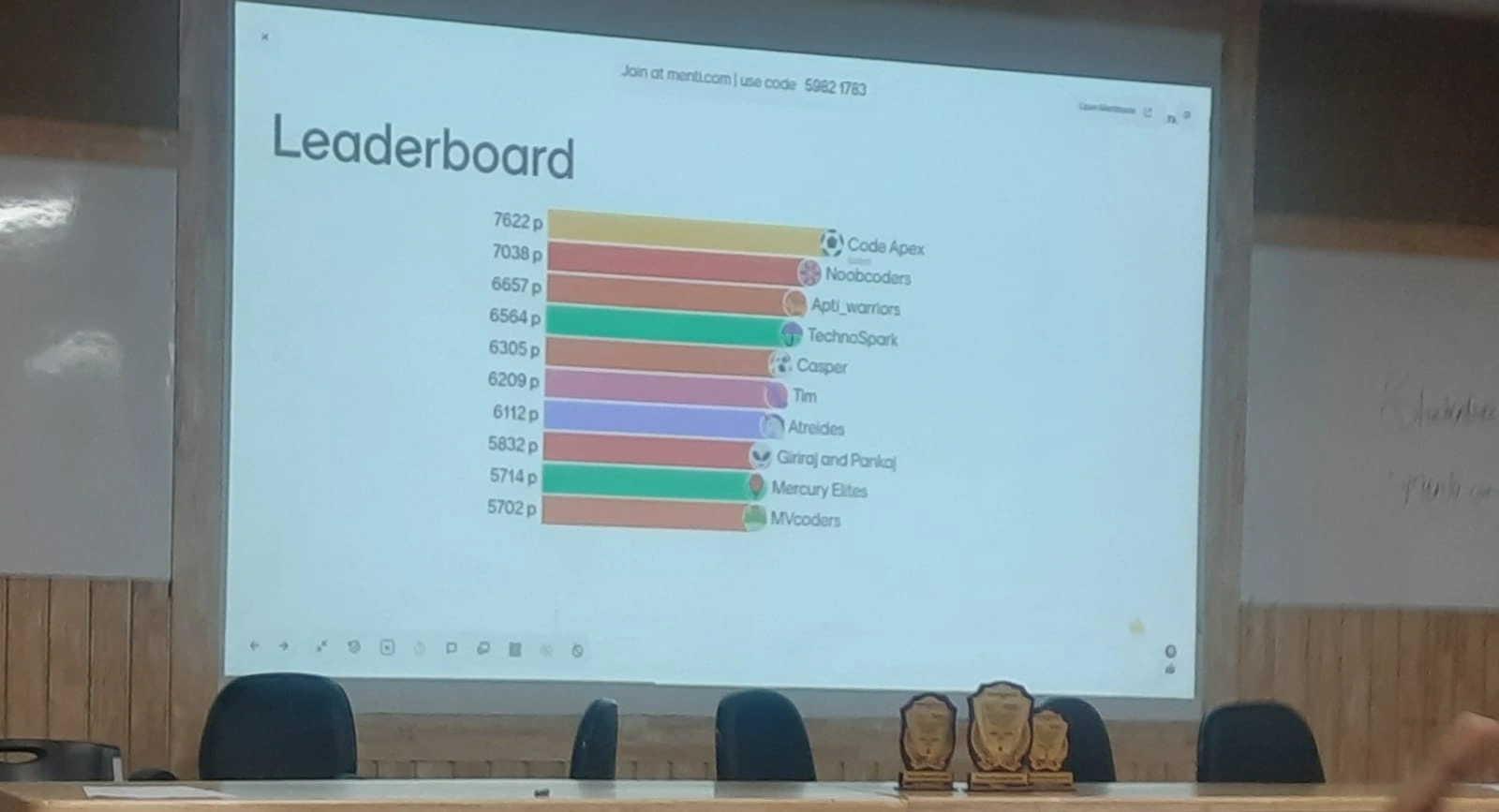
Code Apex - #1 on the leaderboard with 7622 points. That moment when you see your team name at the top.
Code Apex. 7622 points. #1 on the leaderboard.
I looked at Atharva. He looked at me. No words needed. Just a nod. We both knew we were on fire.
Noobcoders behind us at 7038. Apti_warriors at 6657. TechnoSpark at 6564. We had a comfortable lead.
Aakash, Sourabh, and Swapnil - even though they didn't make it past Round 1 - were cheering us on from outside. "Bhai top pe ho! Jeet ke aao!" That support? It hits different when your friends are rooting for you even after their own run ended.
Round 2 results: Code Apex - Qualified. Top of the pack.
Round 3: The Final Battle
This is what it all came down to. The final round. Only the top teams remaining. The problems were harder, the stakes were higher, and every submission counted.
The format was intense:
- Complex algorithmic problems with tricky edge cases
- Timed submissions - speed and accuracy both matter
- Real-time leaderboard - everyone watching everyone
We went in riding the momentum from Round 2. Being #1 on that leaderboard gave us confidence, but we knew the final round was a different beast.
Some problems hit hard. The competition tightened. Teams that were below us started catching up with strong final-round performances.
We fought for every point. Atharva coded the core logic while I stress-tested edge cases. When one approach failed, we pivoted fast. No time for frustration - just adapt and submit.
It wasn't enough to hold #1 in the final standings. But when the dust settled, we were standing strong.
The Announcement: 2nd Runner-Up
All teams gather for the prize ceremony. The tension is palpable. Everyone knows they gave it their all. Now it's just numbers.
They start announcing from the top. First place. Second place.
Then:
"2nd Runner-Up - Code Apex! Sagar Waghmare and Atharva Wandhare!"
We walked up to that stage. The trophy in one hand, certificate in the other. Professors from MGM University handing us the award. Cameras clicking.
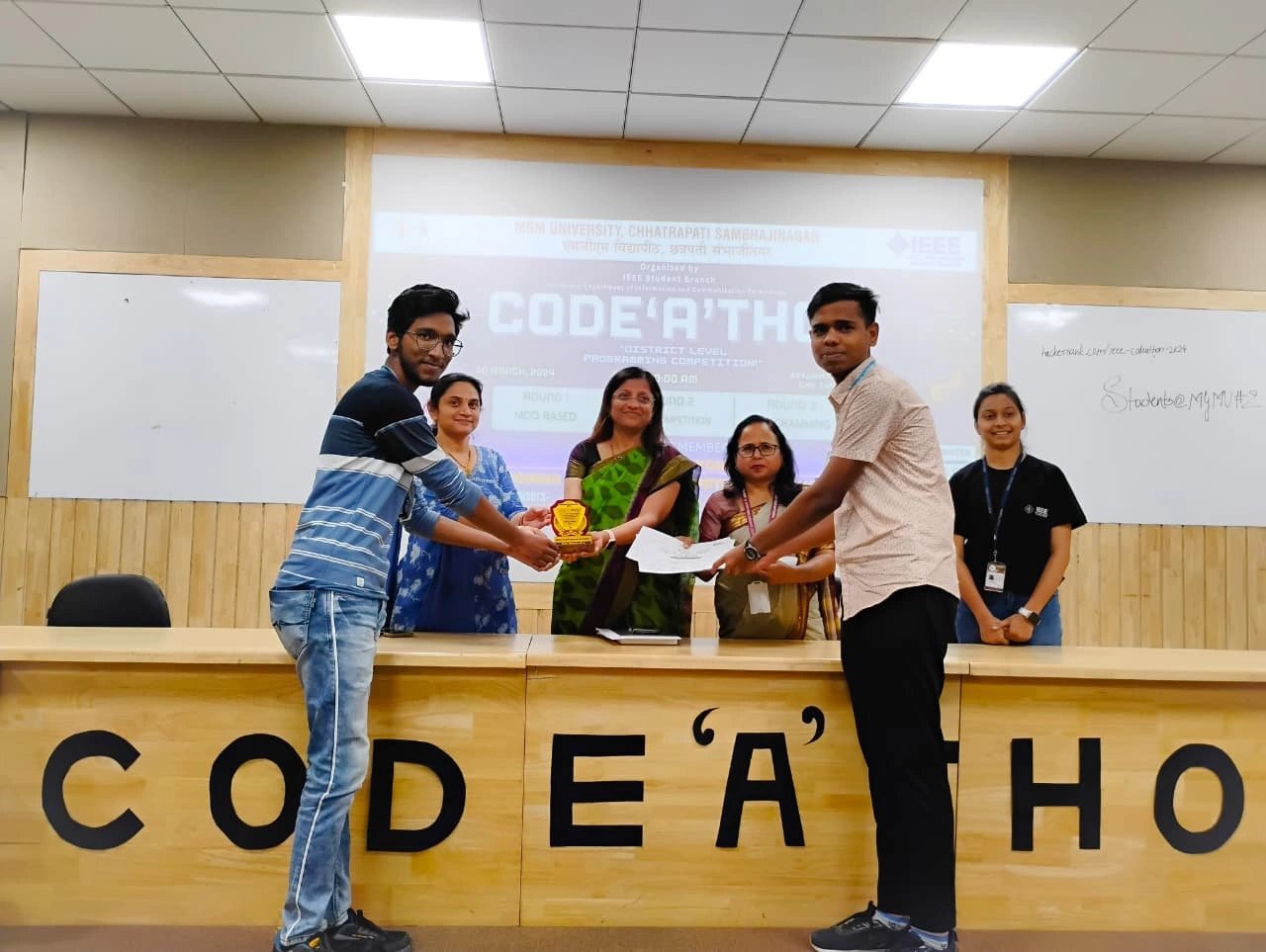
The moment - receiving the 2nd Runner-Up trophy and certificate from the professors at MGM University.
Out of 240 teams. 480 coders from across the district. And Code Apex is standing on that stage.
Aakash, Sourabh, and Swapnil were right there in the audience, cheering the loudest. That meant more than the trophy itself.
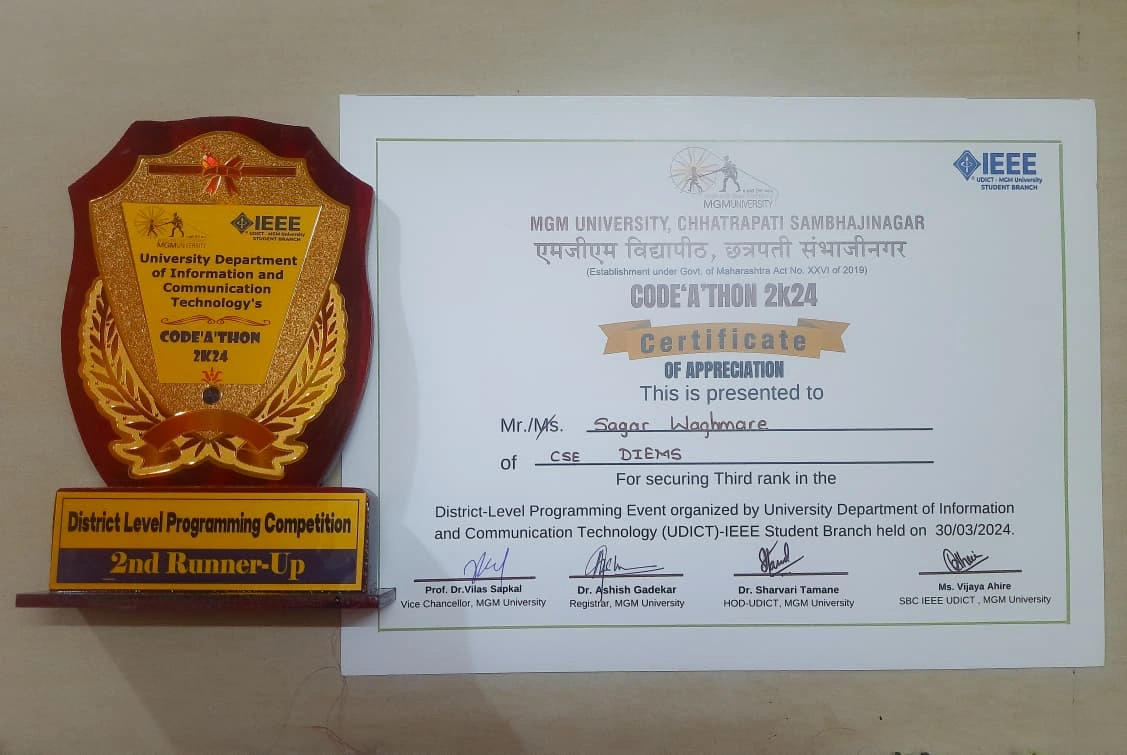
The 2nd Runner-Up trophy and Certificate of Appreciation from CODEATHON 2K24 - District Level Programming Competition by UDICT-IEEE, MGM University.
What We Won
The trophy looks great on the shelf. The certificate reads: "Certificate of Appreciation - For securing Third rank in the District-Level Programming Event organized by UDICT-IEEE Student Branch held on 30/03/2024."
But here's what we really won:
- Validation - All those hours of problem-solving practice? They paid off on a district-level stage.
- Confidence - We can compete against 240 teams and come out on top. That changes how you see yourself.
- Partnership - Atharva and I have a sync that's hard to find. Code Apex isn't just a team name - it's proof that the right partner amplifies your abilities.
- Brotherhood - Aakash, Sourabh, and Swapnil showing up, competing, and then cheering for us? That's what real friendship looks like.
What Made the Difference
Looking back, here's why we made it:
1. Breadth of Knowledge
Round 1's MCQ covered everything - DSA, web, cyber, OS, DBMS. We'd been exposed to all of it through coursework and personal projects. That breadth saved us.
2. Complementary Skills
Atharva is a DSA machine. I'm stronger with system-level thinking and edge cases. Together, we covered more ground than either of us could alone.
3. Trust
When Atharva said "trust me on this approach," I did. When I said "this edge case will break it," he listened. No ego battles. Just mutual respect.
4. Calm Under Pressure
When we were #1 after Round 2, we didn't get complacent. When the final round tightened, we didn't panic. Steady hands win competitions.
5. The Squad
Even though Aakash, Sourabh, and Swapnil didn't advance past Round 1, their energy and support carried us through. Having your boys believe in you? That's fuel.
Shoutout to the Squad
I need to say this clearly:
Aakash, Sourabh, Swapnil - you guys are legends for showing up. Registering for a district-level competition, traveling to MGM University, competing against 240 teams? That takes courage most people don't have.
The MCQ round was brutal for everyone. The cutoff was harsh. You three gave it everything, and I respect that deeply. Competition results don't define skill - showing up does.
Next time, the whole squad clears. That's the goal.
Final Thoughts
That casual call to Atharva - "Bhai, form bharla."
I could have skipped it. Could have said "maybe next time." Could have made excuses.
But I didn't. And that one decision led to:
- A trophy on my shelf
- A certificate from MGM University
- Being #1 on the leaderboard in Round 2
- Standing on stage as 2nd Runner-Up out of 240 teams
- Stories to tell for years
- A stronger bond with Atharva, Aakash, Sourabh, and Swapnil
CODEATHON 2024. Code Apex. 2nd Runner-Up out of 240 teams at MGM University.
Not bad for a spontaneous registration.
Thanks, Atharva - for the partnership, the sync, and the fire.
Thanks, Aakash, Sourabh, Swapnil - for showing up and being there.
Next competition? Code Apex is ready. Just call. We'll be there.
"Bhai, burrr yeto."
Here are some other articles you might find interesting.
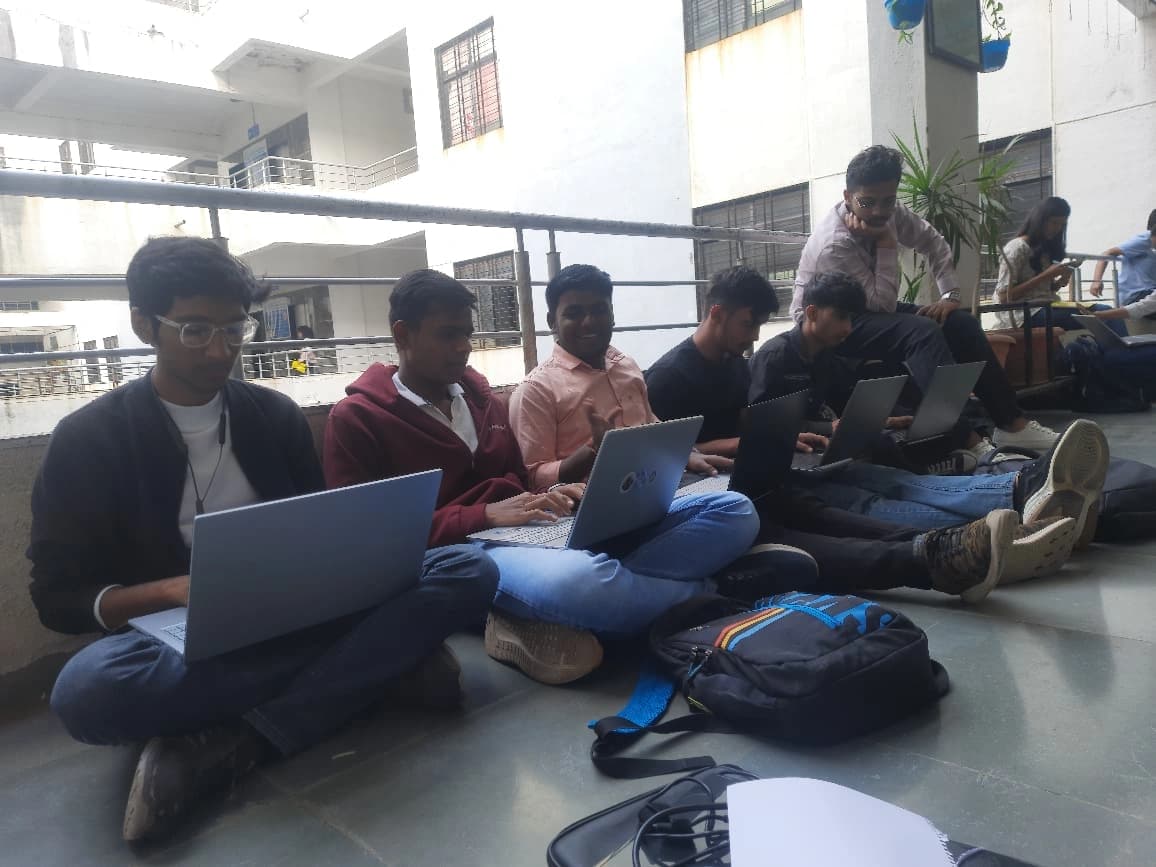
SIH 2024: When 4th Place Taught Us More Than Winning Ever Could
Leading a team of six through the Smart India Hackathon internal rounds in our third year. 4th place, no grand finale - but lessons worth more than any trophy.
Fable 5 vs Opus 4.6: I Gave Two Claude Models the Same Prompt - Both Built Me a Space Shooter
One prompt - my 'astro type typing lab' idea - sent to Claude Fable 5 and Claude Opus 4.6, no follow-ups allowed. Both independently invented a space typing-defense game. Here's the full teardown: architecture, features, SEO, design - and both games are playable inside this post.
